

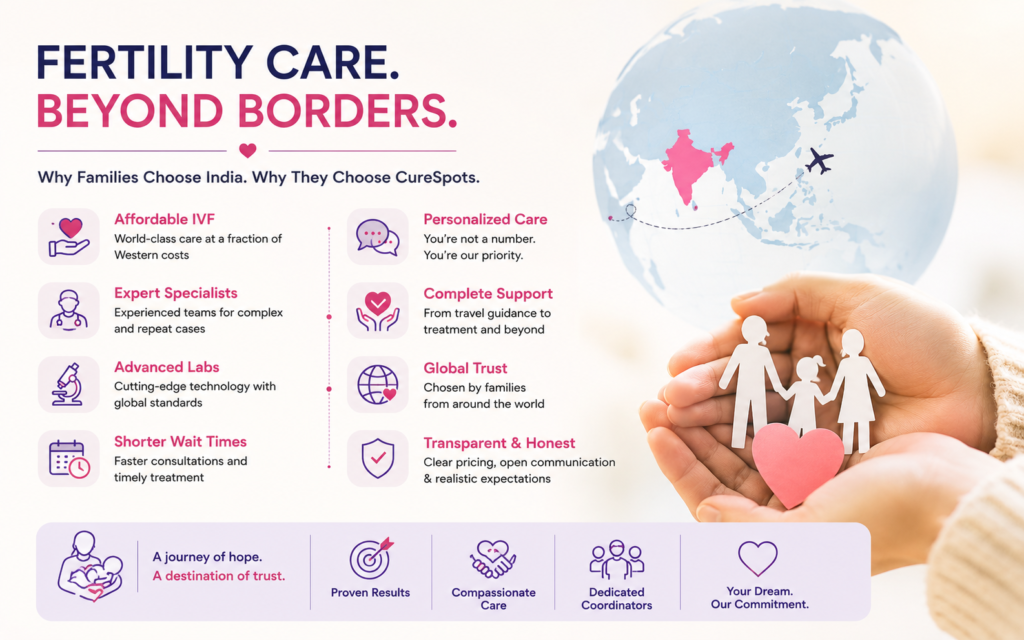
Between diagnosis and decision, thousands of parents with dreams for their children take to the internet each year in search of something that lies beyond their borders. That search has turned India into one of the world’s leading destinations for IVF. And the reasons are far deeper than price tags. We see this change close up every day at CureSpots—families who have waited for years, looked elsewhere and finally landed at a spot where they tell their story before we write the treatment plan. This is the human side of fertility tourism and it’s important to figure it out.
What This Means for You as a Patient
Here’s the story about getting on a plane to travel for fertility: it’s never only a medical decision. It’s an emotional one too. Patients are coming in with a history of having had unsuccessful cycles more than once at home and exhaustion. As a result, only affordable IVF in itself is never going to be enough reason to trust an entire nation with something so personal. What actually builds trust is consistency: a fertility specialist who recalls your history without having to hear it again, a doctor who takes the time to explain what was different from last cycle, and a team that takes every setback as information instead of failure.
At CureSpots, we built our approach around that reality. We meet patients, and we know they aren’t just comparing success rates for the best IVF clinic. They’re assessing whether a place is going to treat them like an actual human being with feelings who is going through something tough, instead of a case number on a spreadsheet.
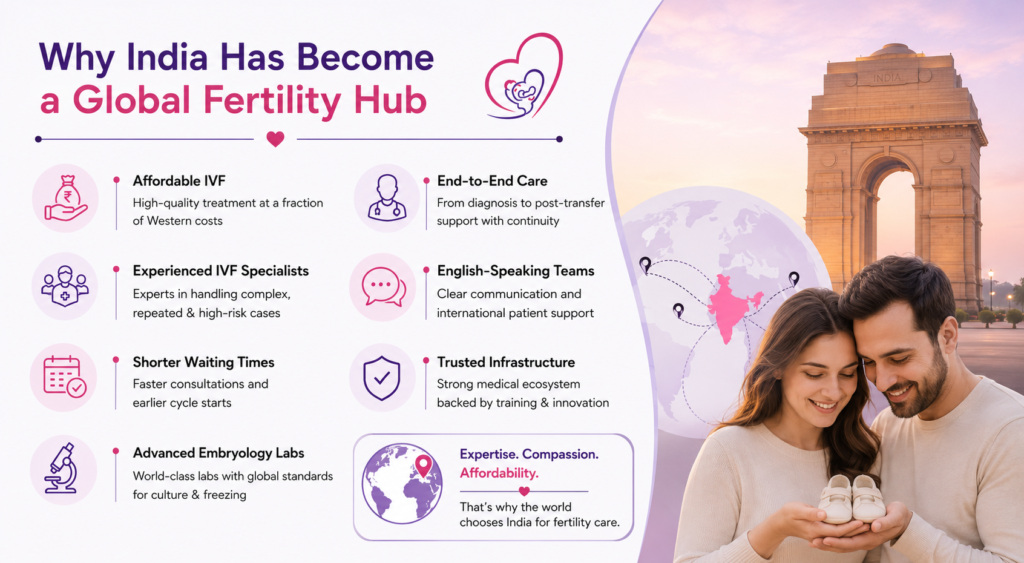
Why India Has Become a Global Fertility Hub
India’s rise isn’t accidental. It’s a rare combination of medical depth with real accessibility.
- IVF treatment is much affordable than in the US, UK or Australia. No cuts on lab standard and protocols
- Highly experienced IVF expert teams, who have got patients through the hardest, second-and third-cycle cases, that other clinics may not have taken up
- Shorter waiting lists, so patients are not sitting for months, witnessing their window of fertility pass slowly by
- Other advanced embryology laboratories, which meet the international standards for culture and freezing techniques
- Complete care by fertility specialists, from initial hormonal assessments to post-transfer follow-up
- Coordination teams that speak English, which matters the most when you’re already going through a stressful, unfamiliar process
A Journey, Not a Transaction
When fertility tourism is seen for what it is, a journey, then it works. That means open and honest conversation of the cost of fertility treatment in India, realistic deadlines, and truthful about what one cycle can or can’t guarantee from the very first meeting. It means being in this for the difficult conversations, as well as the hopeful ones.
FAQs
Q: Why is cost of IVF in India lower than that of Western countries?
Lower operational costs, competitive medical infrastructure, and government-supported healthcare training all contribute, without compromising lab quality or clinical expertise.
Q: How do you make the right choice of the IVF clinic when travelling to start your IVF?
Seek transparency around pricing, actual success data, a coordinated team that practices effective communication, and a reproductive endocrinologist who will thoroughly assess your unique medical history before any commitment.
Q: Does affordable IVF equal to cheap quality care?
No. Affordable IVF in India is usually due to difference in cost structure and not the embryology standards or doctor experience.
Q: What preparations can international patients do before starting IVF in India?
Old medical records, knowledge about protocol timelines, and an open discussion with your IVF doctor about what things to expect and find it hard when it fails.