

Being told that “your AMH is low” can make you feel as if the ground has shifted from under your feet when you are already preparing to go through IVF. It’s one of those medical terms that sounds final, even when it isn’t. If you’re reading this because a report just showed up in your inbox and panic followed, relax. Low AMH might change the IVF conversation but rarely closes that door forever. So now let’s discuss what this number really means and what your options really look like.
What Actually Low AMH Tells You
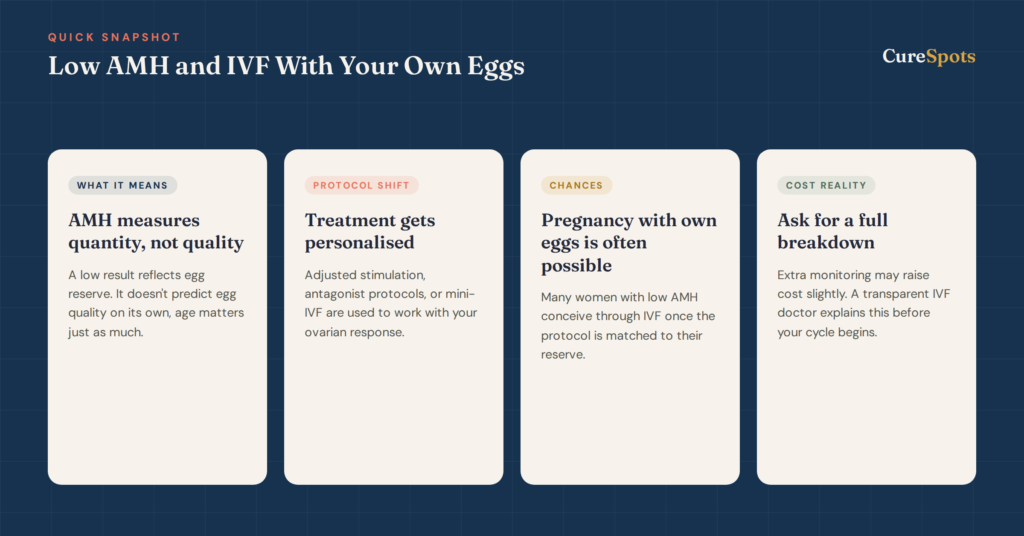
AMH (Anti-Mullerian Hormone) is an estimate of your ovarian reserve: how much useful eggs you have left, rather than their quality. While a small number may feel bad, it is only one piece of the puzzle.
- It measures quantity, not egg quality
- Age is still the principal factor in how your body and eggs respond to stimulation
- Women with low AMH get pregnant naturally or IVF using own eggs
- The AMH test can differ based on the laboratory and cycle timing, which is why most fertility doctors recommend a repeat test with antral follicle count
We tell our patients this all the time: A number on a page is not you. This is not the end of a plan, but simply the beginning of one.
Can IVF Still Work With Your Own Eggs?
In most cases, yes. Your fertility specialist will most likely suggest an individualized approach based on the way your ovaries work and not a one-size-fits-all protocol.
- More stimulation injections at a higher or more adjusted rate to cause larger numbers of follicles to develop.
- Antagonist protocols, frequently utilized for low reserve cases to minimize the likelihood of canceling the cycle
- Other types of IVF such as mini-IVF or natural cycle IVF that some clinics offer where egg quality is prioritized over quantity
- Medically supervised supplements, sometimes recommended long before the beginning of a cycle (e.g., CoQ10 or DHEA)
The most important thing is that you find an IVF doctor who treats your case individually instead of using a protocol for every person walking in the door.
What This Means for Cost and Planning
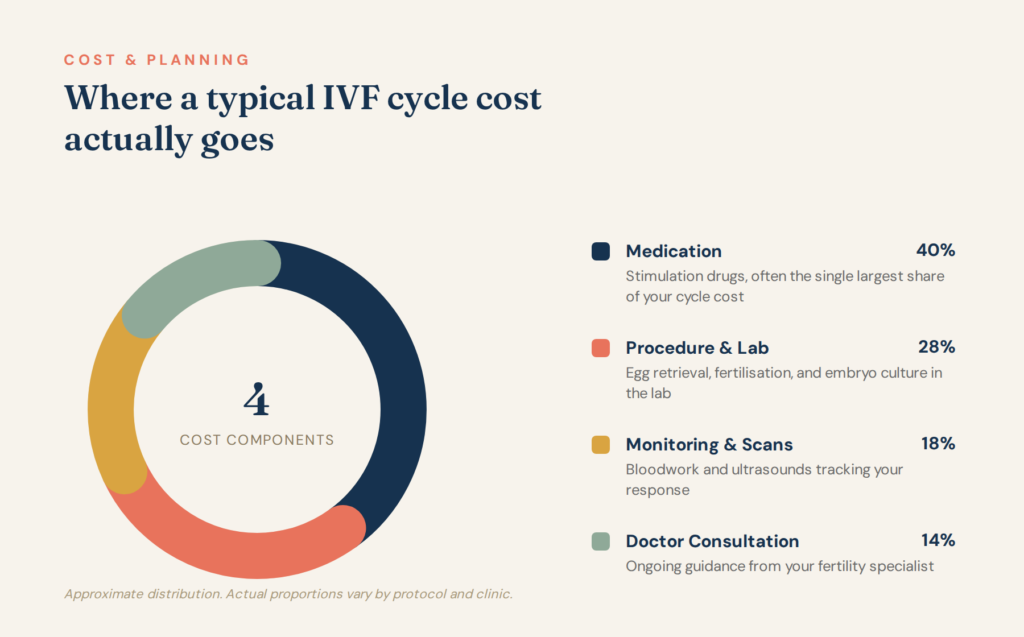
Low AMH often brings with it a second worry closely behind the first: how much will this cost me and how many cycles will I need. The honest answer is that it really depends upon protocol and response, which is why we like to have frank discussions before doing anything.
- The cost of IVF in India remains significantly lower than in the US, UK, or Gulf countries, even with additional protocols for low reserve
- Do not accept a package number from any clinic you think is the best IVF clinic, rather ask for a full breakdown of the cost
- Affordable IVF doesn’t mean cheap monitoring or drugs
- Inquiring about what IVF really costs per cycle – given that multiple cycles may be required – is more useful than getting a single cost estimate upfront
FAQs
Q: Can I fall pregnant with my own eggs?
A: Yes, most women do with a treatment tailored to their ovarian response rather than a standard protocol.
Q: Does a low AMH signify that you have bad-quality eggs?
No, AMH is a measure of quantity and not quality. AMH itself is not a very good predictor of egg quality – your age does it better.
Q: What makes IVF for someone with low AMH different?
Depending on your situation, your fertility specialist may change stimulation doses and/or protocol type or recommend mini-IVF where the treatments used work with ovarian reserve rather than against it.
Q: Does a low AMH increase my IVF costs?
It can if extra monitoring or changes to your medication are required but a transparent clinic will take you through cost before your cycle starts, not after.