
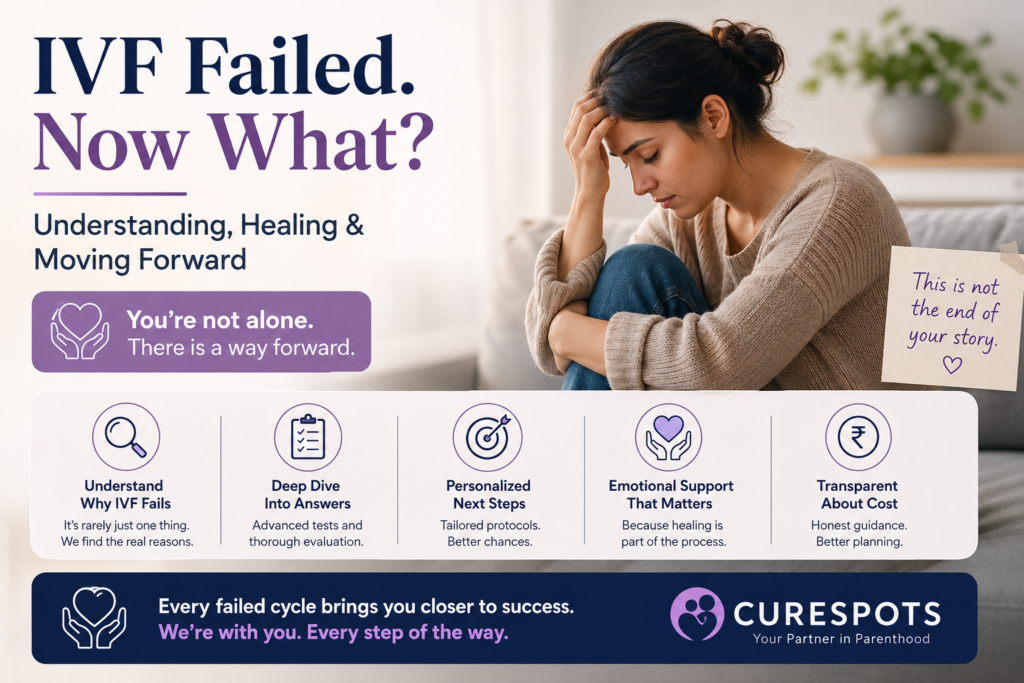
No one ever prepares you for the deafening silence that comes after a failed IVF cycle. You’ve done the injections, the monitoring, that nerve-wracking two-week wait – only to see a number on an otherwise-unremarkable blood report tear apart everything you dared hope. At CureSpots, we’ve talked to enough of the patients in that moment to know: this is real grief, and it needs more than a sterile explanation. But what we know is this – after a failed cycle, there is no definitive solution.
Why IVF Fails: It’s Rarely Just One Thing
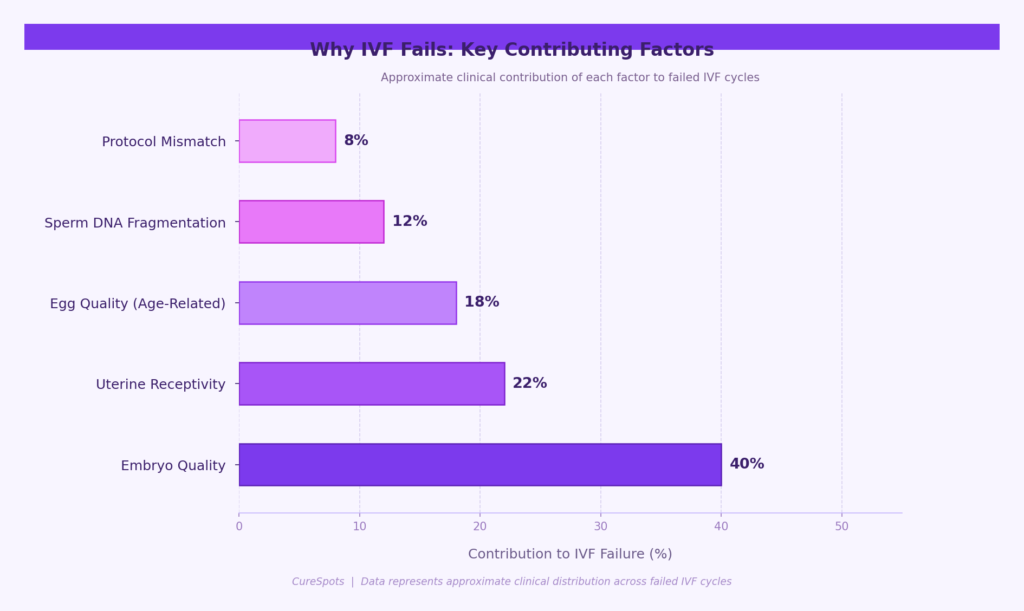
The one question every patient asks their IVF doctor – what went wrong? Simple answer to this is that IVF failure generally has multiple factors. Here are the most typical reasons:
- Embryo quality – Even genetically normal-looking embryos can be abnormal and the lab will not see it
- Uterine receptivity – The lining may be poorly prepared for implantation
- Improper egg quality due to aging – Especially important post 35 years (chromosomal errors)
- Sperm DNA fragmentation – Most neglected but huge difference in embryo development
- Timing and protocol mismatch – At times, the stimulation protocol just was not right for your body
A professional fertility doctor does not keep trying the same protocol. They investigate, adjust, and personalize.
Emotional Cost No One Ever Accounts For
For many, failed IVF holds a kind of grief that doesn’t mingle easily with words. You may feel:
- Isolated, as the probability of others understanding the process is fairly low
- Guilty, even when you never did anything to be guilty over
- Out of money possibly (including pricing of treatment in India)
- Scared of trying again – and just as scared not to
At CureSpots, we never rush through this part. How ready you are to take the next step is just as important as checking off the box for being medically ready.
What Actually Comes Next
A failed cycle creates data. That sounds kind of cold, but it honestly is helpful. Your medical team then has an understanding of your body response, embryo development and the area(s) that could be improved.
Next steps typically include:
- Find your own implantation window with endometrial receptivity testing (ERA)
- What is PGT-A (typically, the screening of embryos for chromosomal normalcy)
- Semen analysis and the Sperm DNA fragmentation testing if has not been previously performed
- Updates to the protocol – different medications, or dosages of medications or timing on triggers
- A pure interpretation of data from your failed cycle
The best IVF clinic is not the one promising success on your first attempt. The one that knows just what to do when the first tug does not go off.
A Word on Cost
Although IVF cost in India is much lower than many countries and affordable IVF options are possible, a failed cycle amounts to an emotional burden as well the financial one. At CureSpots we educate patients about the costs within each cycle, where costs can be optimised (without negatively affecting care), and what multi-cycle planning realistically looks like.
FAQs
Q. When can I do IVF again after a failed cycle?
Most physicians suggest to wait one to 2 menstrual cycles before starting another, depending upon just how your physique has recuperated.
Q. Is it true that we can never conceive after a failed IVF cycle?
Not at all. The majority of patients are not conceived until at least the second or 3rd cycle, notably when protocols are amended by previous results.
Q. How much does a second cycle of IVF cost in India?
Cycle costs vary from clinic to clinic and protocol to protocol, but follow up cycles are often charged at a different basis. Your IVF doctor can tell you what to do next, in light of your own specific attempt.
Q. When looking into other IVF clinic options after a failed cycle – how do I know which to trust?
Find a clinic that follows an extensive examination of your previous records before suggesting a plan – rather than simply replicating the same course.