
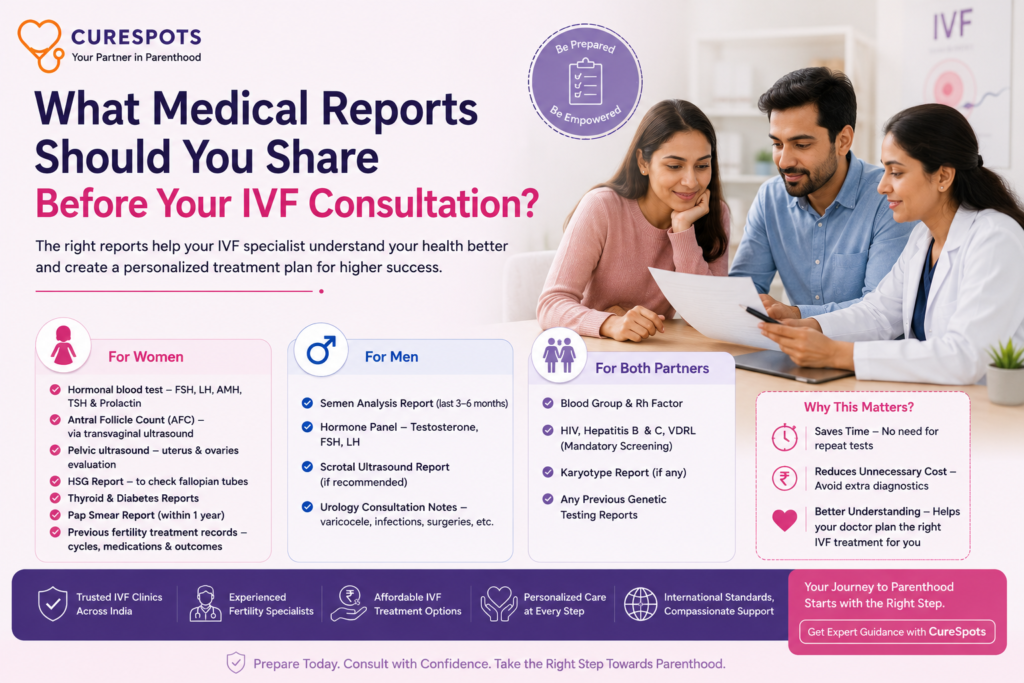
It can be very overwhelming to walk into your first IVF consultation. There is hope in the room, of course – but nerves too, and questions, and often a small fear of the unknown. At CureSpots, we have been fortunate enough to sit across from many more patients than most and the things you bring with you that first appointment are a bigger deal than most realize. Not only do the right medical reports save you time – they also put your IVF doctor in the clear visual of the whole picture and create a plan that actually fits for you. And this is what you should be carrying ideally.
For Women
Your fertility specialist requires a basic hormone and structural baseline before giving any recommendations.
- Hormonal blood test – FSH, LH, AMH, TSH & prolactin levels. AMH, specifically, speaks volumes to your physician regarding ovarian reserve.
- Antral Follicle Count (AFC) – usually via transvaginal US. Bring the report if you have had one recently.
- Pelvic ultrasound – to visualize the uterus and ovaries for fibroids, cysts or structural abnormalities.
- Past HSG – which is a hysterosalpingography that tells if your fallopian tubes are open or blocked, but only if the test was administered.
- Thyroid and diabetes reports – both conditions directly influencing the fundamentals of IVF treatment protocols.
- Pap smear – bring if your last one was within a year ago.
- Prior fertility treatments – cycles attempted, medications used, embryo quality reports and outcomes.
For Men
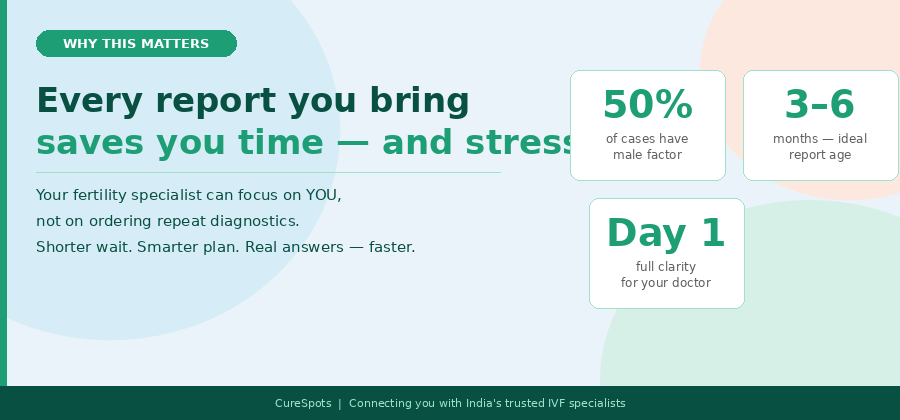
While near half of all cases are attributable to male factor infertility, men often come empty-handed to consultations. Please don’t.
- Semen analysis report – Preferably done within the last 3-6 months. This is non-negotiable.
- Hormone panel – testosterone, FSH, LH if previously performed.
- Scrotal ultrasound – bring the report if recommended before.
- Urology consult notes – these can be for varicocele, infection history or previous surgeries.
For Both Partners
- Blood group and Rh factor
- HIV, Hepatitis B & C, VDRL (mandatory pre-IVF screening done)
- Karyotype reports when chromosomal abnormalities suspected
- Any genetic testing done previously
Why This Actually Matters
But here is the catch – you go in with a complete report, and your doctor spends the time with you, for them to see you does not mean they will have to take out 10 references and send you off for more tests before even discussing. It shortens your wait. Instead of doing repeat diagnostics, which adds to your IVF cost, it saves you some money. In a time when every day seems to matter, that matters.
We connect you to the best rated IVF clinic options and IVF specialists in India – from top fertility doctors/clinics as well as affordable IVF pathways without compromising on care at CureSpots. We help you walk into anything prepared, whether you’re brand new or have been through this before!
FAQs
Q: Can I still see it without all these reports?
Yes, absolutely. Your doctor will tell you what is necessary. But being prepared also means quicker, more tailored responses.
Q: How old can my reports be?
Hormonal reports and semen analysis are best conducted every 3–6 months. Ultrasound and imaging at 6–12 months interval are usually appropriate.
Q: Is the IVF cost in India differentiated on the basis of my reports?
It can. If the reports indicate certain conditions requiring advanced protocols – such as ICSI or (PGT) then your IVF will cost more accordingly. For which a good IVF specialist will tell clearly at the very beginning only.
Q: What if I am just too young and have had nothing done in the way of fertility checking?
The same is totally fine, and more typical than you could imagine. Usually, this first appointment will include a new panel of tests to get you started.