
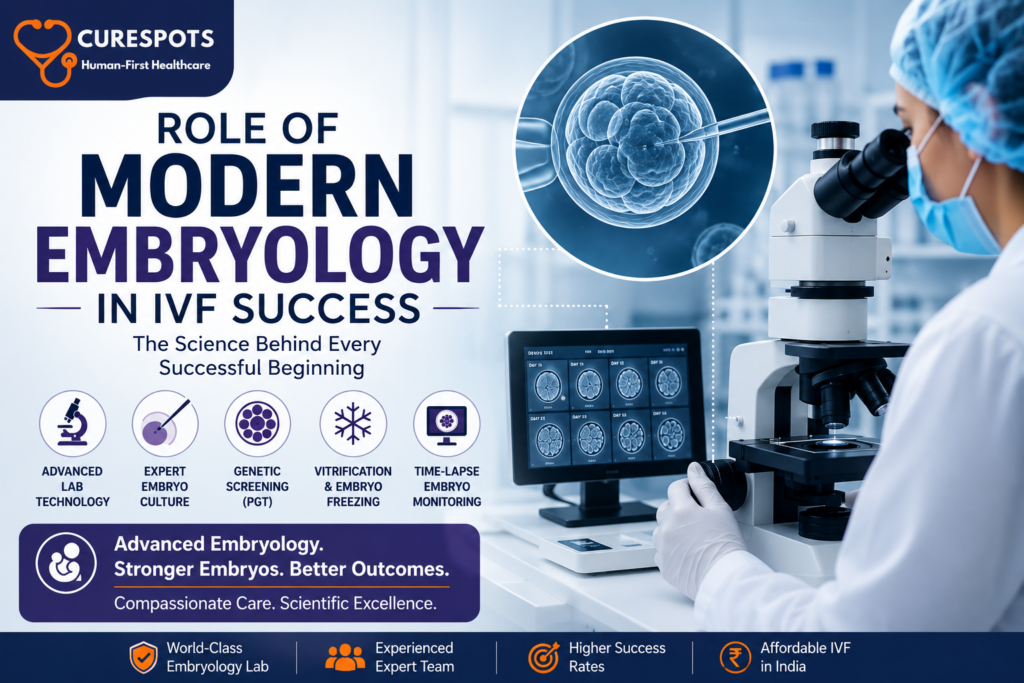
If you have been on a journey of trying to grow your family for some time, you know IVF is more than just the medical side of the process. The late nights spent reading about clinics, the quiet hope after every appointment, the exhaustion of explaining your story to people who just don’t understand. However, very few people know this, behind each of the IVF cycles is a science that is rarely discussed: embryology. And it could be the number one thing that separates a successful pregnancy from yet another disappointing cycle.
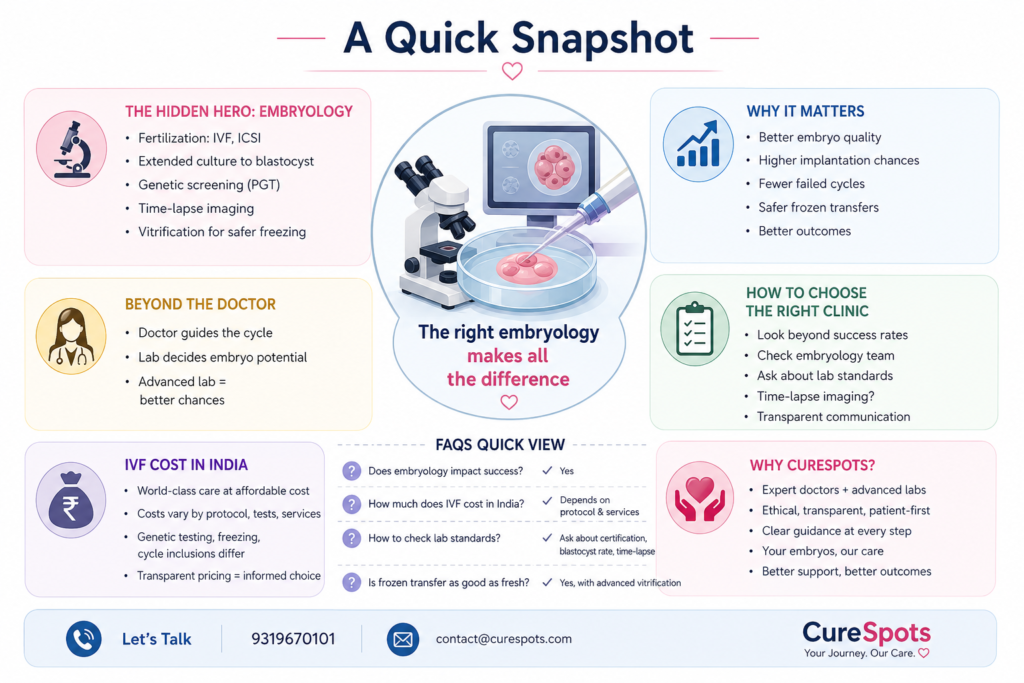
Facts About What Embryologists Do
The cycle itself is managed by your fertility specialist, who will guide you through stimulation and egg retrieval. But after those eggs and sperm come together in a lab, it all comes down to the embryologist – and what happens next frequently determines everything.
What a skilled embryology team adds to your cycle:
- Fertilization techniques such as ICSI (Intracytoplasmic Sperm Injection) in which a single sperm is injected directly into an egg or assisted embryo development like IVF where the embryo matures outside the body.
- Culture goes on for an extended period to the blastocyst stage, allowing embryos five or six days in which to show their strength before being transferred.
- Genetic Screening (PGT) for embryos with the most favorable chromosomal composition
- Time-lapse imaging that allows for the tracking of embryo development without disrupting it, so that decisions are made based on actual growth patterns, not guesswork
- Cautious embryo freezing via vitrification that has made frozen transfers almost as good as fresh
But none of this replaces a good doctor. However, even the best IVF doctor can only make do with what they find in the lab. Which is why often the embryology setup at a clinic matters as much as the doc on record.
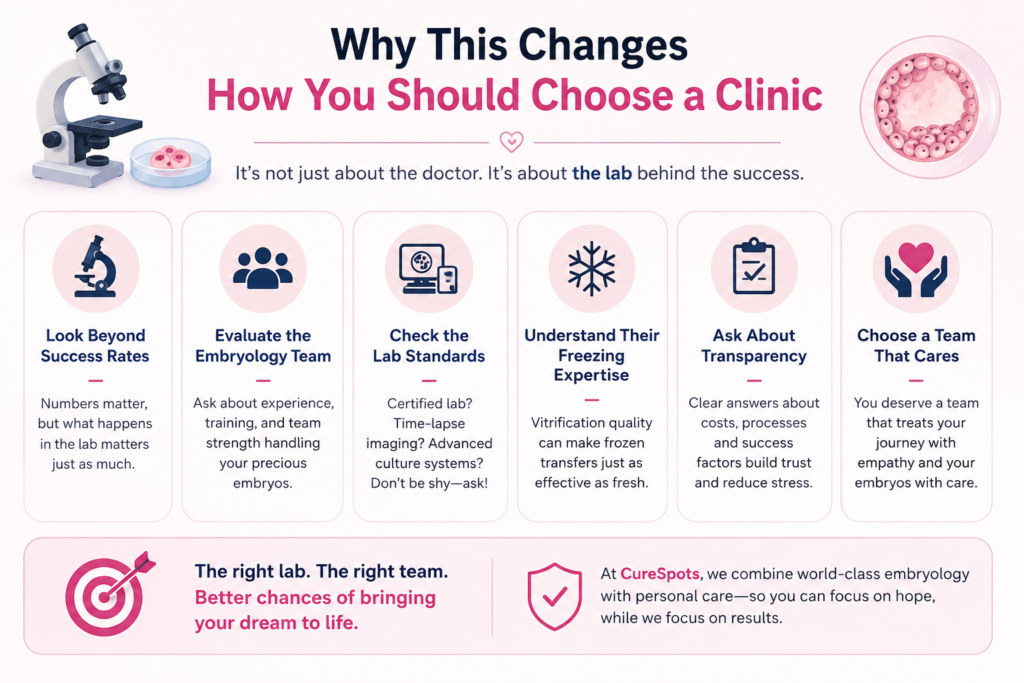
Why This Changes How You Should Choose a Clinic
On searching for the best IVF clinic, people generally refer to the doctors’ achievements and success rate percentages. This is good. But also ask what is going on inside the laboratory. Even the most experienced doctor can fall short when faced with a clinic that has outdated equipment or an overstretched embryology team.
At CureSpots, we have witnessed this difference not only in outcomes but also how supported patients feel throughout. You should not have to become a scientist yourself to understand your own treatment. You deserve a team that has honest explanations and treats your embryos carefully like you would.
Let’s Talk About Cost
Cost always comes first & why not? Affordable IVF does not mean low-quality IVF. Internationally accredited Indian clinics have gained global recognition for matching modern embryology with IVF cost at a fraction of US and UK prices. The only things that do change is what you get: genetic testing, how much it charges to freeze, and even how many cycles your package includes. Now that is the exact kind of detail, we help you understand before you sign on any dotted line.
FAQs
Q: Does an improved embryology really impact the success rates of IVF?
Yes. Using advanced lab techniques to identify and culture the healthiest embryos along with improving implantation rates directly translate into improved success.
Q: How much does IVF cost in India on average?
In any case, this does depend on your protocol and the clinic you choose and whether or not genetic testing is necessary. We help you compare numbers, in a transparent manner.
Q: How can I tell if my clinic has good standards of embryology?
Inquire as to whether the lab they use is certified, what their success rate is for culturing blastocysts and if they utilize time-lapse imaging. The right clinic will be able to answer without hesitation.
Q: Is frozen embryo transfer as good as fresh?
Thanks to advances in vitrification over the years, frozen transfers now achieve results similar to fresh cycles in many instances.