
That hope is a particular kind of hope that walks into an IVF clinic. It is quiet, restrained – the type that’s already seen some heartbreak. We see it at CureSpots every day, and none of this is why the advancements happening in reproductive technology are so important to us. IVF has been they did so for many years, but surely what’s going on in IVFs in India currently at its best are unique. Better labs. Smarter tools. More answers, fewer guesses.
Moving Away from Guessing and Instead Towards Precision
An IVF attempt has been only a numbers game for me. Try, wait, hope, repeat. What technology has done is it to reduce the uncertainty. The fertility specialist today, isn’t simply guessing – they’re armed with information that didn’t even exist five years ago.
So what has been the true change on the ground?
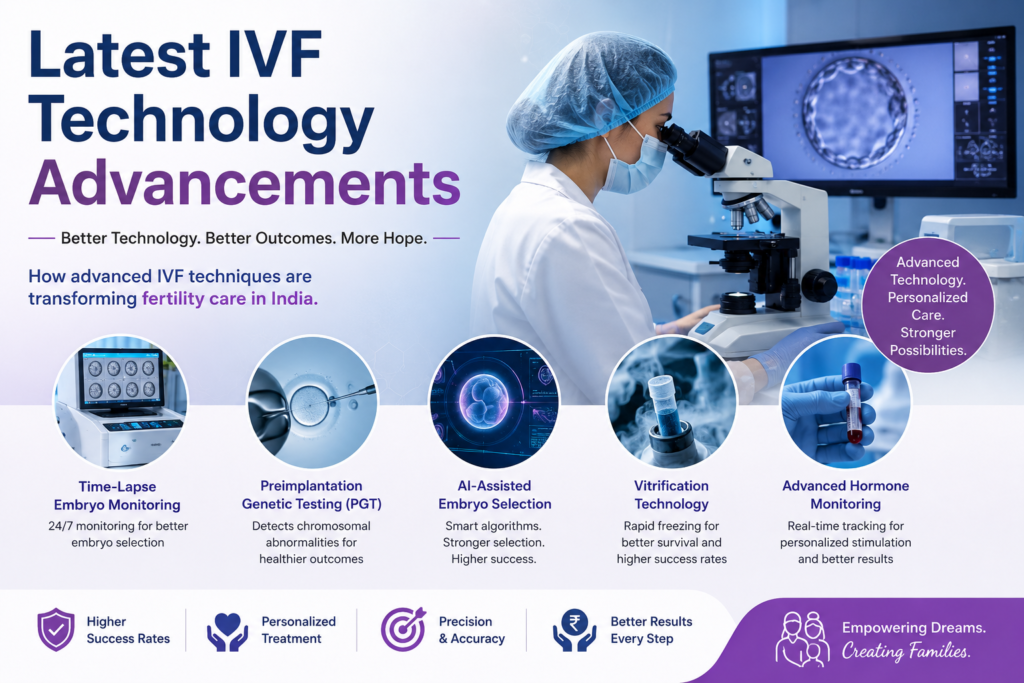
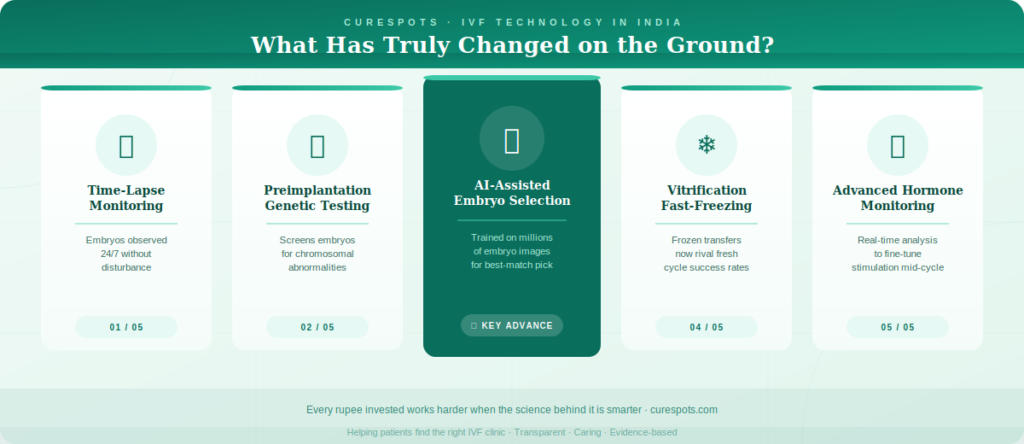
- Time-lapse embryo monitoring – Instead of checking embryos manually, incubators are equipped with cameras to allow for the 24-hour continuous monitoring of developing embryos. Rather than discard them to examine fertilization (which can alter conditions), an IVF physician may view thousands of images and choose the embryo most likely to flourish. It’s a tiny change that makes a huge impact.
- Preimplantation Genetic Testing (PGT) – This tests embryos for chromosomal inaccuracies prior to embryo transfer. Instead of still more waiting, couples facing recurrent failure or miscarriage are finding genuine answers here.
- AI-assisted embryo selection – Algorithms trained on millions of images of embryos now assist embryologists as they rank candidates for transfer. That winning formula of human expertise and machine consistency is seemingly unstoppable.
- Vitrification (rapid freezing technology) – The previous slow-freeze methods were damaging for eggs and embryos. Vitrification has revolutionised frozen embryo transfers since then and nowadays success rates are equal to many fresh cycles.
- New hormone monitoring – This tests blood in real time, enabling clinics to adjust stimulation protocols during the ovulation cycle. This is important for women who don’t respond predictably to standard doses.
What This Means for Patients in India
India has become a serious player in reproductive medicine, not just because of affordable IVF, but because the quality has genuinely caught up. Metro city clinics – and more recently in tier-2 cities too – are investing in lab tech you see internationally. IVF costs in India still one of the low-cost IVF options available worldwide. The cost of In Vitro Fertilization is roughly between Rs.1.2 to Rs.2.5 lakhs per cycle based on the protocol, city and clinic. Technology helps the ratio of cost-benefit on every rupee spent – this means fewer failed cycles, thus a scaled-up journey costs lesser in emotional and financial terms. CureSpots finds you the most suitable match: a real clinic with infrastructure not just selling things. IVF on a budget should not mean old fashion IVF.
Human Part Still Matters
Technology can optimize an embryo. It can’t take you by the hand in a waiting room or soften the blow of an ugly result with compassion. Some of the greatest results arise when sophisticated resources are combined with committed teams. That is exactly what we look for when making a recommendation of a clinic.
FAQs
Q: Will improved technology lead to IVF success?
Not that much – but it sure does increase your chances a lot. Avoidable failures are eliminated by technology; biology has the last word.
Q: Does advanced technology make IVF expensive?
A few additional ponies like PGT can be bought for an additional expense. The best IVF doctor will break down for your candor, which are actually worth it based on your situation.
Q: Does the affordable IVF mean lower quality in India?
Not necessarily. Operational costs are lower in India, not patient care; hence the cost advantage. Dozens of clinics produce world-class results for a fraction of the cost worldwide.
Q: How to find the best IVF clinic for me?
Your data set should include easily accessible success rates, experienced embryologists and updated lab equipment along with a fertility specialist who takes the time to help you understand your protocol – not just rush you into treatment.